Remote Job Scam
Identifying and Avoiding Remote Job Scams
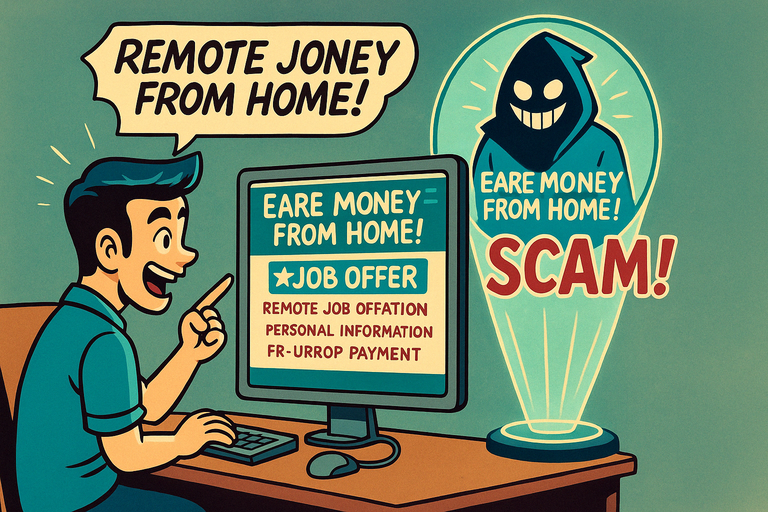
A remote job scam offers easy work from home for surprisingly good pay: rating products, watching videos, completing simple tasks on an app, or repackaging parcels and posting them on. The work is either fake (the "earnings" never get paid out) or you're being used as part of someone else's fraud, like a money mule or a reshipping mule for stolen goods.
The approach usually arrives by WhatsApp, Telegram, or an unsolicited message about a role you never applied for. Real remote jobs have proper interviews, written contracts, and pay you, not the other way round.
Things to Be Careful About:
- Unrealistic Job Offers: Promises of high income for minimal work are often fraudulent.
- Upfront Payments: Scammers may demand money for training, software, or equipment.
- Generic Job Descriptions: Vague or overly broad job roles may indicate a scam.
- Unverified Employers: Fake companies may use generic or suspicious email domains.
- Data Requests: Fraudsters may ask for Social Security numbers, bank details, or other sensitive information early in the process.
Actions You Can Take:
- Research the Employer: Verify the company’s legitimacy through their website, reviews, and government databases.
- Avoid Paying Upfront: Genuine employers do not ask for payments for job-related tools or training.
- Protect Personal Information: Share sensitive details only after verifying the job offer and employer’s credentials.
- Look for Red Flags: Be cautious of employers who avoid interviews or have unclear hiring processes.
- Report Suspicious Jobs: Notify job platforms or authorities about fraudulent remote job listings.
Remote job scams prey on the growing popularity of work-from-home opportunities. By staying vigilant and verifying employers, you can protect yourself from fraudulent offers and secure legitimate remote positions.
Still worried about online scams?
If something doesn’t feel right, you don’t have to deal with it alone. Get instant guidance from ScamAvert AI, or try the free Open Beta app for ongoing protection.
No credit card required
Want to learn how to spot this kind of scam?
CyberSafe Coach provides free, short lessons that teach you how to check before you act — the habit that protects you against this scam and every other kind.
CyberSafe Coach is an independent partner service. The link will open in a new tab.