Lottery Scam
How to Identify and Avoid Lottery Scams
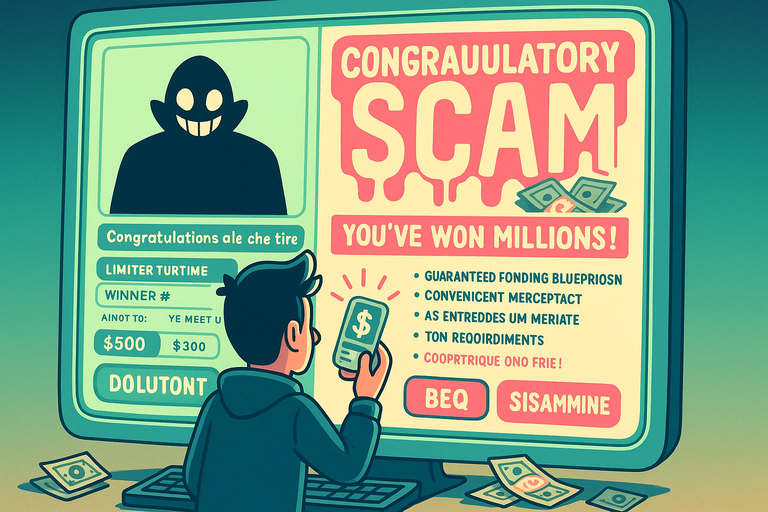
A lottery scam tells you you've won a prize in a draw you never entered: a national lottery, an international sweepstake, a Microsoft or Google "loyalty draw", or a giveaway run by a famous brand. To claim it, you're asked to pay a fee for taxes, processing, or release of the funds, and to share your bank details for the transfer.
The message arrives by email, text, letter, or phone, often dressed up with official-looking logos and a reference number. Real lotteries don't contact people who didn't enter, and no legitimate prize asks you to pay anything to receive it.
Things to Be Careful About:
- Unsolicited Notifications: Be skeptical of messages or calls claiming you’ve won a lottery you never entered.
- Requests for Upfront Fees: Scammers often demand payment for taxes, processing fees, or delivery costs.
- Generic Greetings: Messages that do not address you by name or contain vague details are likely scams.
- Pressure Tactics: Fraudsters may insist on immediate action to claim your prize, discouraging verification.
- Over-the-Top Promises: Unrealistic claims of massive rewards are a hallmark of lottery scams.
Actions You Can Take:
- Verify the Lottery: Research the organization through official channels to confirm the legitimacy of the lottery.
- Decline to Pay Fees: Genuine lotteries do not require winners to pay fees to claim prizes.
- Guard Personal Information: Do not share sensitive details like your bank account, ID, or address with unverified sources.
- Consult Trusted Sources: Discuss the situation with family, friends, or legal professionals to identify potential red flags.
- Report the Scam: Notify consumer protection agencies or law enforcement about fraudulent lottery messages.
Lottery scams prey on the excitement of unexpected rewards. By verifying claims and staying cautious, you can protect yourself from financial losses and personal data theft.
Still worried about online scams?
If something doesn’t feel right, you don’t have to deal with it alone. Get instant guidance from ScamAvert AI, or try the free Open Beta app for ongoing protection.
No credit card required
Want to learn how to spot this kind of scam?
CyberSafe Coach provides free, short lessons that teach you how to check before you act — the habit that protects you against this scam and every other kind.
CyberSafe Coach is an independent partner service. The link will open in a new tab.